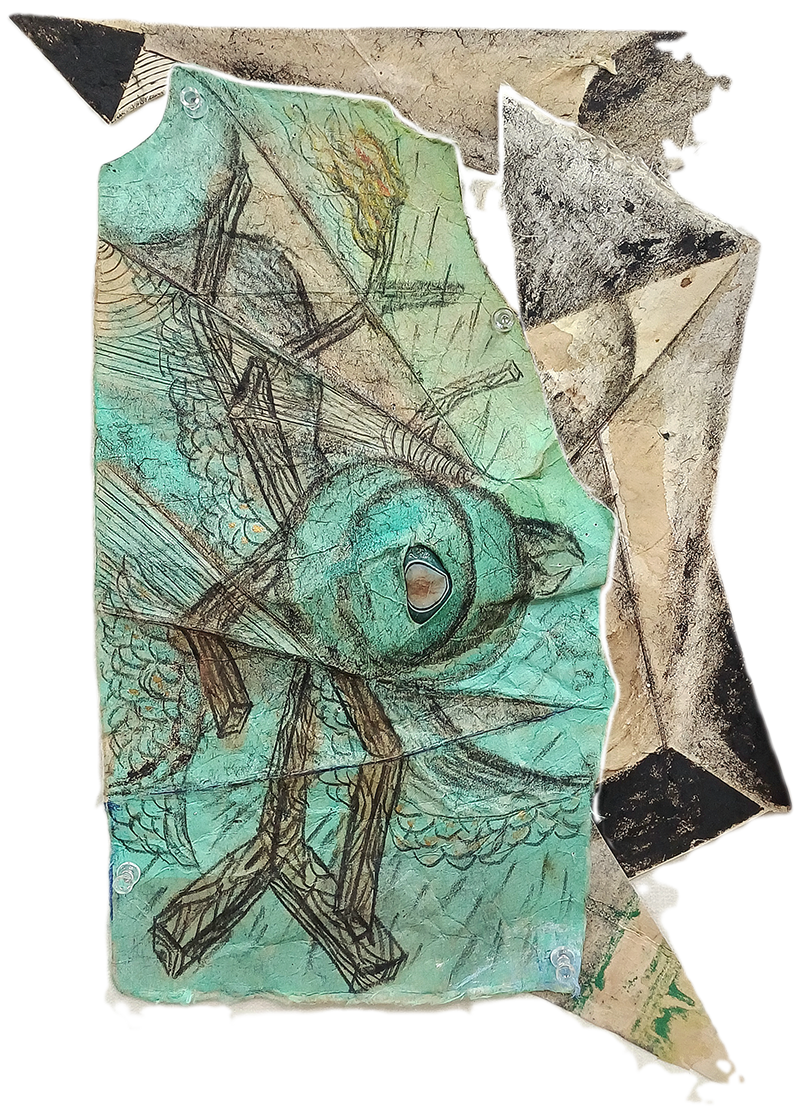
횡설종설-“깜빡이는 소년”의 문답화
1.
대체 어떻게, 무슨 그림을 보여줘야만 웃을 수 있단 말인가.
우월한 피지컬에 문예로 단련된 작가가 세상을 보여주고 있건만, 나는 왜, 너는 왜, ‘나너’는 왜 만나지 못하고 있는가.
작품을 전시할 때, 이런 인연이 있다.
작품을 먼저 만나고 작가를 만나는 경우, 반대로 작가를 먼저 만나고 작품을 만나는 경우, 그리고 작가와 함께 작품을(또는 작품과 함께 작가를)만나는 경우.
세상의 인연은 어떨까, 존재로 세상을 만나는 것일까_주체적, 세상을 살아서 존재하는 것일까_관계적, 아니면 삶이 존재고 존재가 삶이 되는 것일까_동시성.
모든 소통이 온전히 이루어져 이어지는 것은 아니다. 인간은 생각전환을 하루에 6천200번 한단다. 단순 생각만 5만~6만 회라고 하니, 오만가지 생각을 한다는 말이 과학적으로도 틀리지 않다.
사윤택 작가는 몇 번이나 될까, 그리고 그의 관람자_독자인 나는?
2.
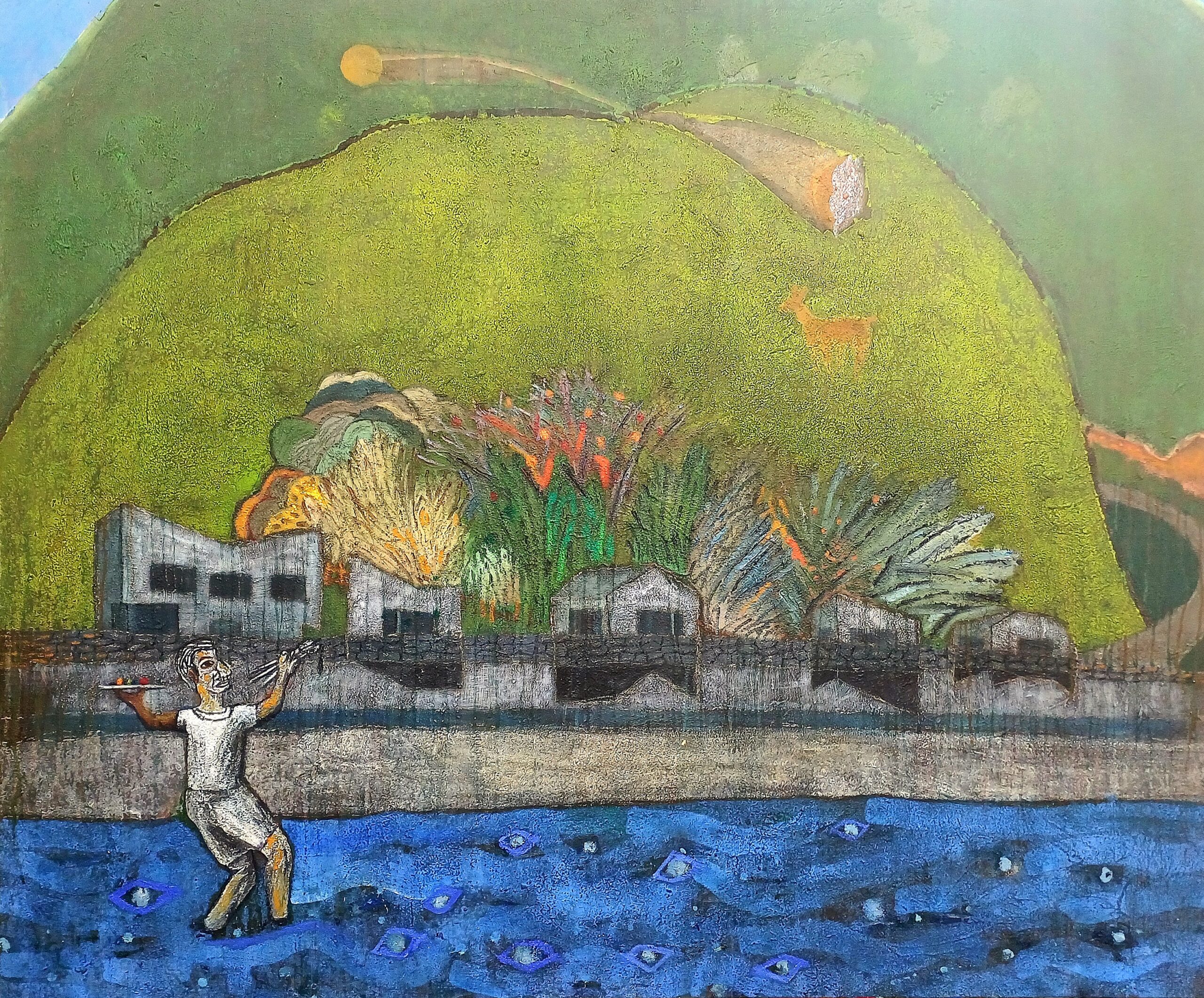
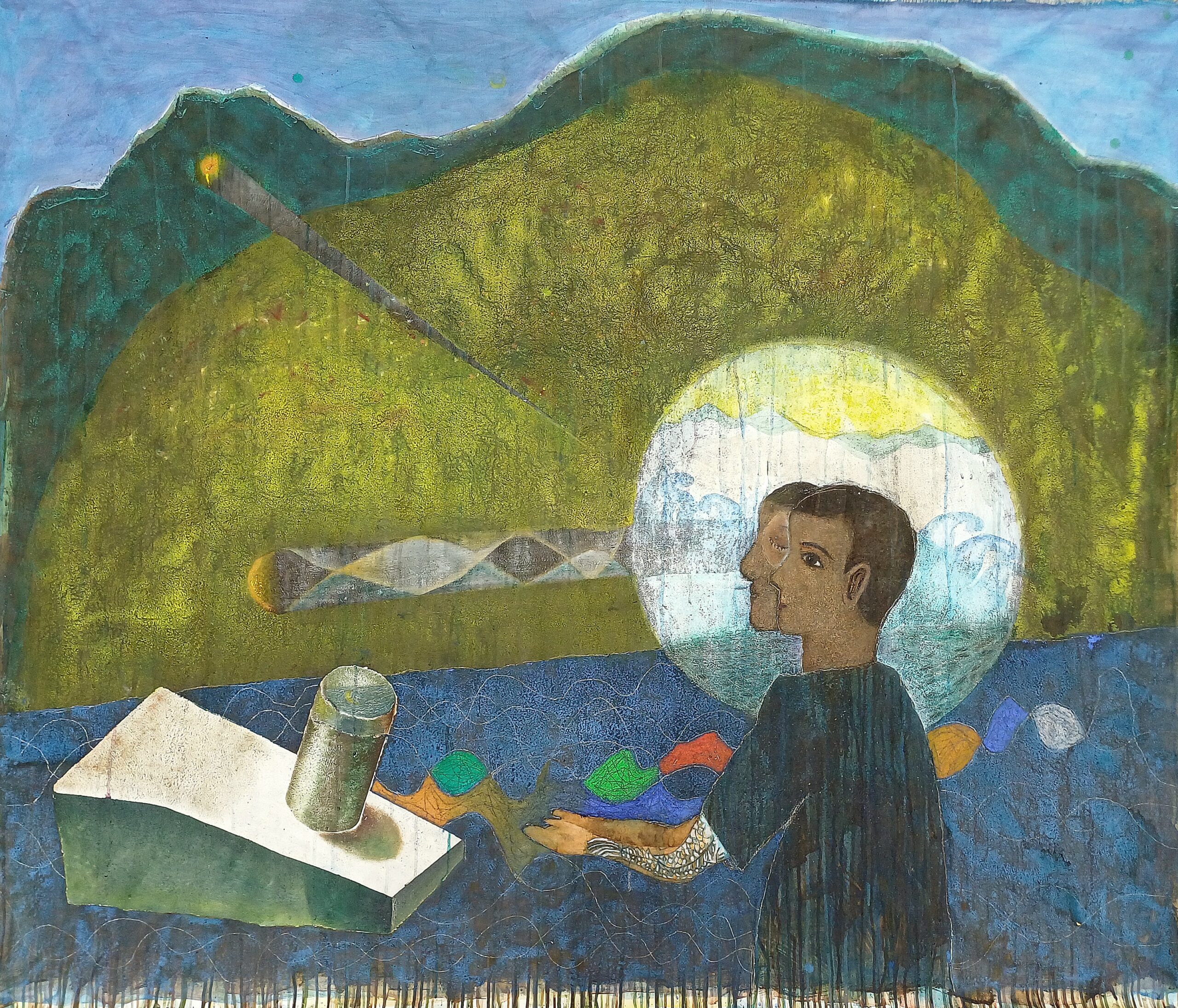
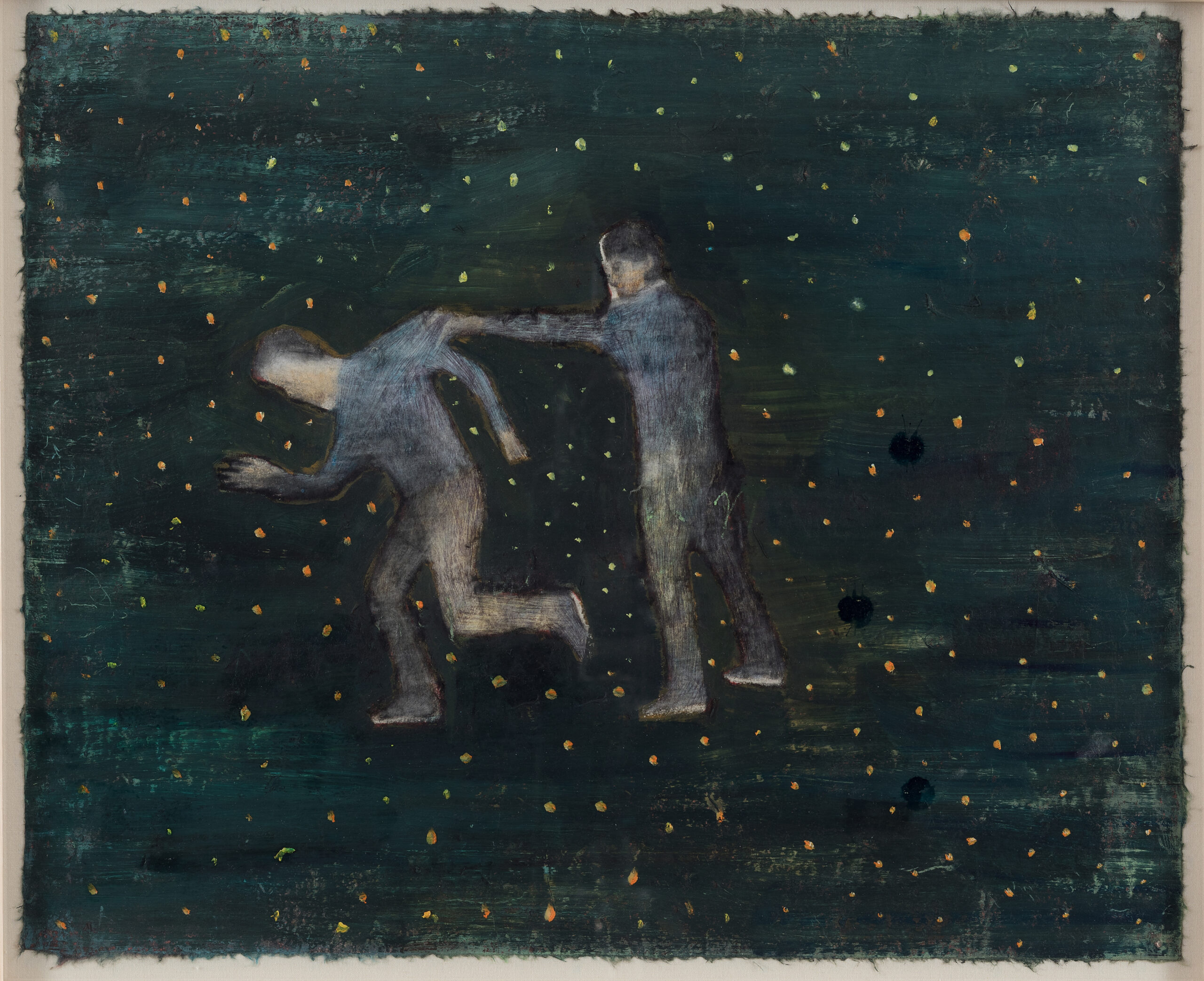
사윤택 작가는 첫 개인전 《이미지 페인팅 Image Painting》(2002) 부터 《동굴 시네마_호모 픽토리우스 Cave Cinema_Homo Pictorius》(2025) 까지, 줄곧 질문하고 대답하는 회화적 언어가 있다.
그가 스스로 문답하는 ‘회화’란 그의 시각적 경험이 출발이다.
운동(권투)을 했던 작가는 신체의 움직임_속도_시간에 민감하다. 테니스공과 자전거 휠의 움직임과 속도, 운동하는 사람들의 동작, 탁구와 배구 경기의 순간들처럼 운동장면이 많다.
그림 소재에 신체활동이 많은 이유, 그리고 신체성이 강조된 회화의 배경에는 그의 운동 경험이 육감으로 작용하기도 한다.
(“…그 순간적인 흔들림과 움직임 속 : 그것이 사실 우리가 살고 있는 현상에 가장 자연스러운 부분이다. 그런데 회화적 장면으로 멈추었을 때는, 어떻게 봉인된 시간들이 왜곡, 회화장면이라는 해석 속에서 더 실험적으로 나아갈 수 있을까?…”)
동물적 감각의 눈은 현실의 순간 속에서 카메라_기계처럼 장면을 포착한다. 그는 포착한 장면을 가지고 회화적 현실로 재구성한다.
이후, 시각경험의 수단과 공간이 TV, 블랙박스, CCTV 등 현대의 전자통신 기술이 재생한 시공간으로 이동했다 해도 그가 몸_신체로 체화한 감각은 여전히 그의 회화 세계가 출발하는 바탕이다. 그 경험의 세계들은 “순간, 포착, 기억”, “시간, 장면, 망각”, 그리고 “이미지, 실험”과 같이 회화로서의 지각활동으로 이어지며 현실을 재구성한다. 이 과정에서 그만의 회화방식이 탄생하고 의미를 갖추기 시작한다. 작가로서의 회화적 문제의식이 발화하고 현실을 재구성하는 것이다. 물리적 공간에 있는 나, 통신세계의 너, 그 사이의 시간과 공간의 불일치, 부조화, 불안정 등 존재론적 질문들이 이어진다.
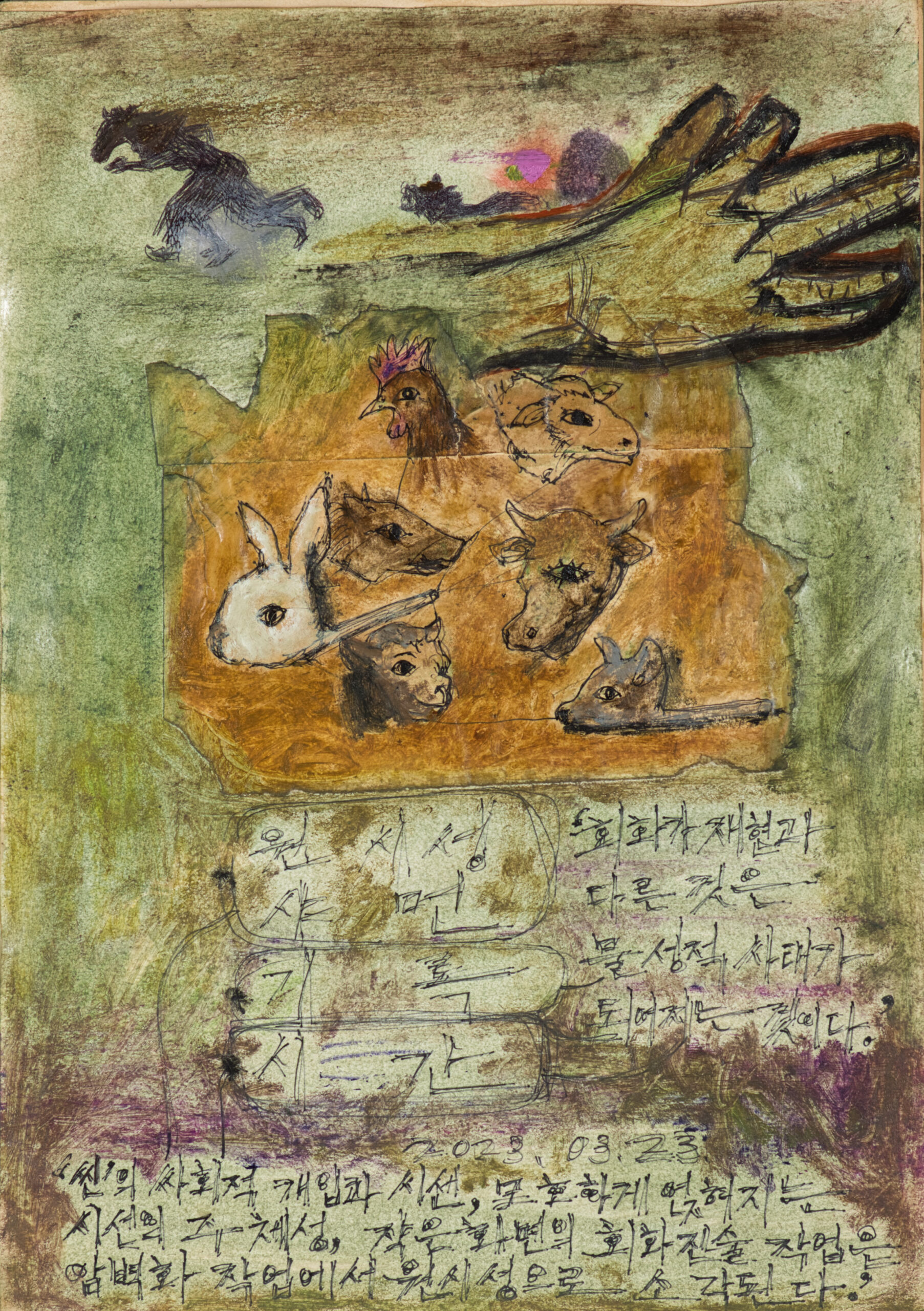
이어서 그의 최근작을 보면, 궁극의 회화로서 이미지의 탄생과 기원을 추적한다. 그래서 쇼베 동굴과 알타미라 동굴 벽화를 차용하고 우리 역사유적에 관심을 갖기도 한다. 그의 벽화에는 3만~4만 년 전 이미지가 아닌, 오늘과 지금 현실이 그려지고 있다. 풍경과 배경에는 138억년 우주를 상대하며 양자역학을 적용한 시공간 해석이 등장한다. 그만큼 작가와 회화의 존재영역이 확장된 세계를 반영하고 있는 것이다.
회화 세계, 즉 이차원적 평면의 세계란, 지각을 바탕으로 현실의 일부를 선택해 어느 시점을 그린다. 작가는 세계를 있는 그대로 보지 않고 해석하며 본다. 그래서 작가의 시점(perspective)에 따라 세계는 달라진다. 결국 회화는 세계 자체가 아니라 보이는 방식을 다루는 예술이다.
이렇게 볼 때 사윤택 작가의 회화에 있어서 그가 지각한 세계와 시점이 중요하다. 그가 지각하는 세계_현실은 찰라의 연속이다. 그 찰라의 시간 속에 개입하는 의식세계이다. 그 의식 활동이 다시 시각적 현실로 구체화하는 것이 그의 관심사인데 이를 반영하고 해석한 것이 그의 그림이다. 즉, 사윤택의 `세계내존재` 방식을 다룬 것이다.
사윤택 작가는 세계의 현실 그 자체를 드러내는 것이 아니라 현실을 다시 만드는 방식으로써 재현을 바탕으로 한다. 그의 회화는 현실을 그대로 복제하는 것이 아니다. 특정 시점에서 포착한 세계를 심리적 작위성이 개입하여 일정한 자기 해석을 통과한 후 드러낸다. 이는 결국 조형적 선택과 변형 그리고 구성을 거치게 된다. 이때 그의 회화는 대상을 다시 구성하는 적극적 회화행위를 보여준다. 그것의 바탕은 회화적 재현(representation)에 있다. 서사적 방식이든 모방이나 추상의 방식 또는 그 모두가 동원된다 해도 결국 작가는 이차원적 재현을 바탕으로 세계와 현실을 다시 구성하여 조직한다. 그렇게 구성하고 조직한 그의 회화가 의미의 층위를 드러내게 된다. 그 의미의 층위는 사윤택 작가가 왜 그림을 그리고 무엇을 그리고자 하며 어떻게 그리는가하는 질문으로써 그 질문의 답 일부를 드러내게 된다. 사윤택 작가의 회화적 의미를 구성하는 방식은 상징(symbol)의 이미지이고 그림 속에 이야기인 서사(narrative)이기도 하다. 그리고 작가의 의도와 독자(감상객)의 해석에 의해 의미가 완성될 수도 있다.
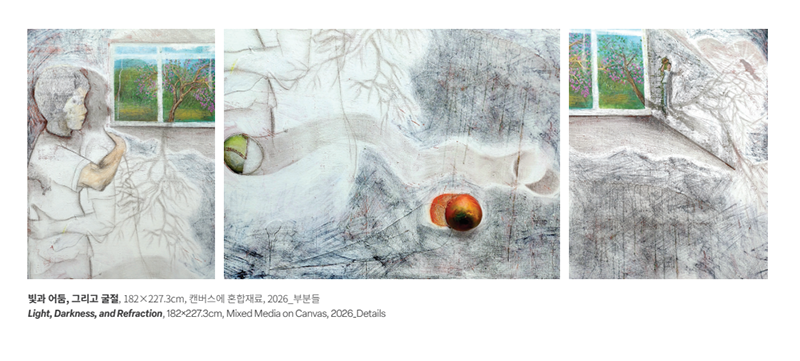
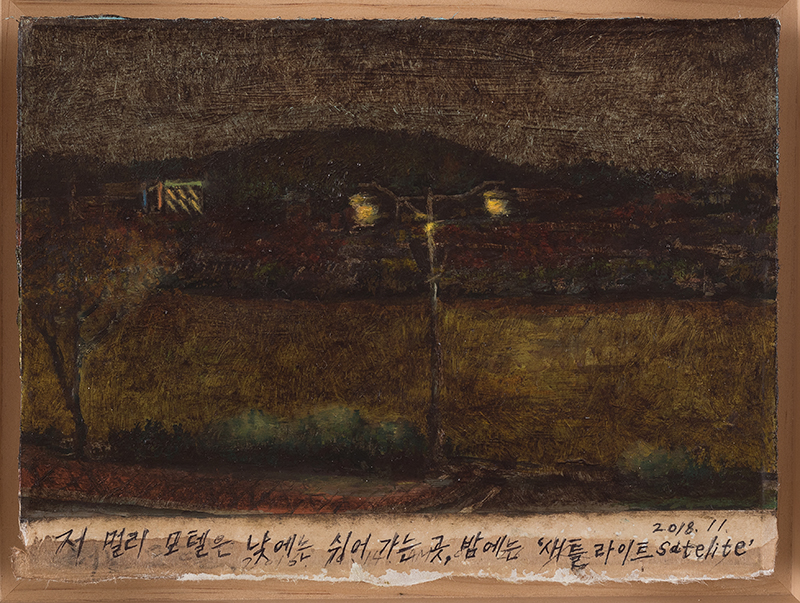
사윤택 작가의 회화는 이러한 의미를 강화하는 방식으로서 회화의 방법론, 즉 자신만의 작법을 구사한다. 회화는 결국 물질적 기반에 근거하므로 물감이 두터운 마띠에르와 빠른 붓놀림으로 재현하는가 하면, 어느 때는 물감 흘리기를 남기거나 얇고 흐리게 처리하여 불확실하고, 시간의 불명확성을 배가시키기도 하며 의미를 강화한다. 또한 시간을 정해놓고 세 시간만 그린다거나, 낮의 장면을 그린다음 그 위에 밤의 장면을 다시 포개어 그리고 완성작으로 내놓기도 한다. 이러한 회화 작법은 개성에 일조하기도 하는데 사윤택 회화의 특성상 낮은 명도와 채도, 흐릿한 처리, 미완성인 듯 처리한 묘사, 빠른 붓질의 속도감, 특정 시간성을 제시하지 않는 화면의 모호함 등 물질로서 물질위에 남겨진 흔적 모두가 이에 해당한다.
결국 그의 회화는 개념인 동시에 물질(성)이라는 이중적 존재가 된다.
사윤택 회화_이미지는 어떻게 보이는가, 그는 그 세계를 어떻게 다시 조직하는가, 그리고 그 모든 것은 결국 무엇을 말하고 의미는 무엇인가 하는 것이 우리가 독해해야 하는 그의 회화 세계이다.
3.
다시 질문한다.
‘대체 어떻게, 무슨 그림을 보여줘야만 웃을 수 있단 말인가’
순간을 포착할 수 있는가, 포착한 것이라면 순간인가.
이차원의 평면에 시공간이 담기는가, 그 장면은 궁극의 목적에 도달할 수 있는가.
자답한다.
현실을 재창조하고 있는 작업으로, 가장 솔직한 회화의 본성이 여기에 있다.
Wandering Discourse – “Dialogue of a Blinking Guy”
1.
How on earth, what kind of painting must be shown in order to make someone laugh?
An artist, physically exceptional and trained through literature, is presenting the world—yet why is it that I cannot meet you, and you cannot meet me, and that “I-you” fails to encounter itself?
When exhibiting works, there are such kinds of encounters:
there are cases where one first meets the artwork and then the artist, cases where one first meets the artist and then the artwork, and cases where one meets the artist together with the artwork (or the artwork together with the artist).
What, then, is the nature of encounter in the world?
Is it a matter of existing as being-in-the-world—subjectively?
Is it a matter of existing as lived existence—relationally?
Or is life itself existence, and existence itself life—simultaneously?
Not all communication is fully completed or sustained. Humans reportedly change their thoughts about 6,200 times a day. With 50,000 to 60,000 thoughts in total, it is not scientifically incorrect to say that the mind contains “ten thousand strange thoughts.”
How many times, then, does artist Saryun Taek think? And what about me, the viewer-reader?
2.
From his first solo exhibition Image Painting (2002) to Cave Cinema_Homo Pictorius (2025), artist Saryun Taek has consistently developed a pictorial language of questioning and answering.
The “painting” in which he converses with himself originates from visual experience.
Having trained as a boxer, the artist is highly sensitive to bodily movement, speed, and time.
His works frequently depict scenes of physical activity—such as the motion and speed of a tennis ball or bicycle wheel, or moments from table tennis and volleyball games.
The reason his subjects often involve physical action, and why corporeality is emphasized in his painting, is that his experience in sport functions as a sensory foundation.
(“…Within those moments of trembling and movement: that is, in fact, the most natural aspect of the phenomena we live in. But when frozen into a pictorial scene, how might these sealed times become distorted, and, within the interpretation of painting, move further toward experimentation…?”)
The animal-like eye of perception captures reality like a camera within the instant. He then reconstructs the captured scene into a pictorial reality.
Even as the means and space of visual experience shift toward contemporary electronic communication technologies—TV, dashcams, CCTV—the embodied bodily sensibility he has internalized remains the foundation from which his pictorial world begins. These experiential worlds—“moment, capture, memory,” “time, scene, forgetting,” and “image, experimentation”—extend into perceptual acts of painting that reconstruct reality.
In this process, his unique pictorial method emerges and gains meaning. His artistic problematic is activated and reality is reconstructed.
Questions of existence continue to arise: the “I” in physical space, the “you” in the communicative world, and the disjunction, dissonance, and instability of time and space between them.
In his recent works, he traces the origin and genesis of the image as the ultimate form of painting. He therefore appropriates the cave paintings of Chauvet and Altamira, and also shows interest in historical sites in Korea. Yet what is depicted on these walls is not images from 30,000–40,000 years ago, but the reality of today and the present moment.
In the backgrounds and landscapes appears a temporal-spatial interpretation engaging with the 13.8-billion-year universe, incorporating concepts drawn from quantum physics. This reflects an expanded ontological domain of both the artist and painting itself.
Painting, as a two-dimensional plane, selects a fragment of reality based on perception and depicts a particular moment. The artist does not see the world as it is, but interprets it while seeing it.
Thus, the world changes according to the artist’s perspective. Ultimately, painting is not the world itself, but an art of ways of seeing.
From this perspective, what matters in Saryun Taek’s painting is the world as he perceives it and his point of view. The reality he perceives is a succession of fleeting moments—an engaged consciousness within those instants.
What he is concerned with is how this conscious activity is concretized again into visual reality, and his paintings are interpretations of this process. In other words, it concerns his mode of being-in-the-world.
He does not reveal reality as it is; rather, he reconstructs reality as a method of world-making. His painting is not a mere reproduction of reality. A world captured at a specific moment passes through psychological construction and subjective interpretation.
This involves compositional selection, transformation, and arrangement. In this sense, his painting demonstrates an active act of re-constructing the object. Its foundation lies in pictorial representation.
Whether narrative, imitation, or abstraction—or all at once—the artist ultimately organizes and reconstructs the world and reality on a two-dimensional representational basis.
The meaning of his work emerges through this process of structuring. That meaning is partially revealed through the questions: why he paints, what he seeks to paint, and how he paints.
The meaning-making structure of Saryun Taek’s painting is both symbolic imagery and narrative within the painting. Meaning may also be completed through the interpretation of both the artist’s intention and the viewer’s reading.
His painting further strengthens meaning through its methodology—his own painterly techniques.
Since painting is grounded in materiality, he may employ thick impasto and rapid brushwork, or at other times dripping or thin, blurred layers that emphasize uncertainty and amplify temporal ambiguity.
He may limit time—painting only for three hours—or overlay a night scene over a daytime scene to complete a single work.
Such methods contribute to his artistic identity: low brightness and saturation, blurred treatment, seemingly unfinished depiction, rapid brush speed, and ambiguous temporality—all traces left upon matter by matter itself.
Ultimately, his painting becomes a dual existence: both concept and materiality.
How, then, does Saryun Taek’s painting-image appear? How does he reorganize the world? And what does all of this ultimately mean?
These are the questions we must read within his pictorial world.
3.
We ask again:
“How on earth, what kind of painting must be shown in order to make someone laugh?”
Can a moment truly be captured? And if it is captured, is it still a moment?
Can time and space be contained within a two-dimensional plane? And can such an image reach its ultimate purpose?
We answer ourselves:
As a practice that is continually reconstructing reality, this is where the most honest essence of painting lies.